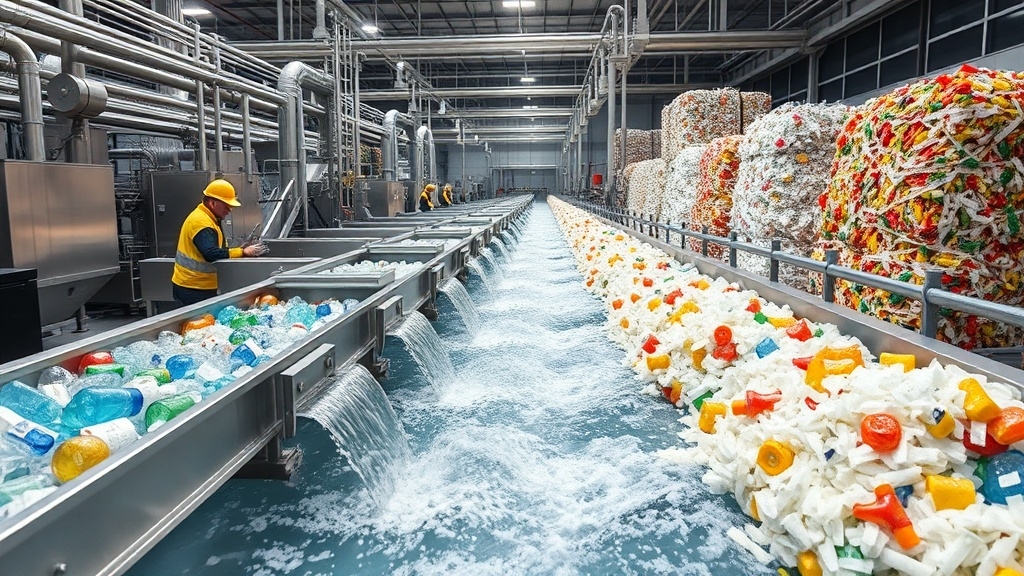
How to Match a Plastic Pelletizing Machine to Your Washing Line is a practical topic for any plant that wants stable recycling or production work. The right answer depends on the real feed, the target output, and the way each shift runs. A machine can look suitable on paper yet struggle when material changes. Clear checks before start-up help the team avoid that gap.
In basic terms, a plastic pelletizing machine is an extrusion unit that melts prepared scrap, filters the melt, and cuts it into reusable pellets. The plant expects it to make even pellets that can be stored, blended, and used in later plastic making. That result depends on settings, wear, and feed condition. No single control can correct every input problem.
Planning for a Plastic pelletizing machine should link the machine duty to the full plant process. This makes steady day-to-day performance easier to discuss with staff and suppliers. It also gives the team a sound base for tests and daily records. The following points show how to turn that review into useful action.
Brief Overview
- Set clear limits for steady feed, clean melt, stable pressure, even pellet size, and controlled cooling. Base the plan on clean film flakes, rigid regrind, densified scrap, or other sorted thermoplastic feed, not an ideal sample. Balance every stage so one machine does not hold back the line. Use routine care such as changing screens, checking heaters, cleaning the die, watching oil, and logging motor load. Keep steady day-to-day performance simple enough for every shift to follow.
Understand the Job Before Choosing Equipment
A line works best when its task is narrow and well defined. Good results depend on how well the team manages steady day-to-day performance. The best design starts with a clear view of clean film flakes, rigid regrind, densified scrap, or other sorted thermoplastic feed. That goal should guide each choice made before the line is ordered. Operators should record how the feed changes across each shift.
These materials do not behave the same in every plant. Moisture, dirt, size, and bulk density can change the load. Good planning links the feed, the process, and the next use. A sample run can reveal issues that a data sheet may miss.
Map the Route from Feed to Finished Output
A change PET washing line at one stage may appear as a fault much later. The plant should treat steady day-to-day performance as a daily process goal. Operators should watch flow, sound, load, and material shape. Surges often cause poor cleaning, heat swings, or uneven output.
Good flow lowers wear and gives the team more time to react. Start-up should be slow until flow and settings become stable. Small buffers can help when the feed arrives in batches. Shutdown should clear wet or hot material from key areas. Each stage should pass a steady load to the next one.
Use Simple Checks to Hold a Stable Standard
Operators need clear action when a result moves out of range. For this topic, the main aim is steady day-to-day performance. Quality loss often begins with feed changes or poor housekeeping. Keep sample tools clean and use the same method each time. Frequent small checks are often better than one late test.
Set a simple limit for each check and record the result. Samples should come from normal flow, not only the cleanest batch. Integration with a Plastic PE film washing line should be checked with real feed and output data. A trend can show wear or drift before output fails. Trace poor output back through the line in reverse order. A clean work area also lowers the chance of new dirt entering the product.
Make Maintenance Easy to Record and Repeat
Oil and grease should match the maker's stated grade. For this topic, the main aim is steady day-to-day performance. Maintenance works best when operators report small changes early. Routine care includes changing screens, checking heaters, cleaning the die, watching oil, and logging motor load. Keep common seals, screens, tools, and sensors close to the line.
A good handover notes open faults and parts that are due soon. Cleaning is also a chance to inspect hidden surfaces. Use a simple list for each shift, week, and planned shutdown. Short daily checks can prevent a long and costly stop. Lockout steps must come before hands enter any guarded area.
Make Controls and Material Flow Work as One
Downstream stops need a safe way to pause or divert feed. For this topic, the main aim is steady day-to-day performance. Plan how the line will restart after a short stop. Feed height and discharge height affect conveyors and floor space.
Integration tests should use the full route, not one machine alone. Shared data can help teams find where a delay begins. Material should not fall far enough to break, scatter, or make dust. Transfer points need access for cleaning and jam removal. A balanced line is often more useful than the fastest single unit.
Frequently Asked Questions
What is the main job of a plastic pelletizing machine?
Its main job is to provide a controlled route from clean film flakes, rigid regrind, densified scrap, or other sorted thermoplastic feed to even pellets that can be stored, blended, and used in later plastic making. The exact layout can change by plant. The core aim stays the same. Feed should move safely while quality remains easy to check.
Which feed details should be checked first?
Check material type, size, moisture, dirt, bulk density, and any unwanted items. These facts affect load and wear. They also change the needed wash, heat, cut, or dry step. A mixed sample is often more useful than the cleanest sample.
How can a plant keep output more stable?
Use steady feeding, clear setting ranges, and short quality checks. Record load, flow, stops, and visible changes. Correct the first cause rather than raising speed at once. Stable work usually gives more good material over a full shift.
What should routine maintenance include?
Routine work should cover changing screens, checking heaters, cleaning the die, watching oil, and logging motor load. Staff should also report new heat, noise, leaks, or vibration. Planned care is safer than a rushed repair. A simple log helps the next shift see what changed.
How should buyers compare different options?
Use the same feed, output goal, and quality limits for each quote. Compare safety, cleaning time, wear parts, utility use, and service access. Ask what assumptions support the stated rate. The best option is the one that fits the full plant duty.
Summarizing
Strong results come from matching the plastic pelletizing machine to the actual plant duty. Feed, layout, utilities, staff, and the next process all matter. A balanced line is easier to run and easier to maintain. It also gives quality teams a clearer point of control.
Before a final choice, confirm resin type, feed shape, moisture, dirt level, pellet style, output, and filter needs. Make sure service tasks can be done without unsafe shortcuts. Use the first production runs to refine settings and check lists. That work creates a stronger base for long-term operation. Simple checks help teams prevent waste.
Zhangjiagang MG Machinery Co., Ltd is a modern enterprise specializing in waste plastic recycling and extrusion equipment. Our company is located in Zhangjiagang City, Jiangsu Province, China, 2 hours from Shanghai International Airport by car, near the Shanghai deepwater port and Yangtze River Port, and with the developed highway traffic, It’s very convenient for your visiting and equipment transportation.